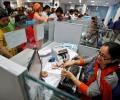
For the first time in 21 years, the Reserve Bank of India (RBI) will revise norms for investment portfolios of commercial banks to reflect changes in global standards on valuation and measurement, and progress in the domestic market. This could pave the way for banks to transition to the new accounting standards (Ind-AS). The outstanding investment portfolio of commercial banks was at Rs 45.84 trillion as of November 19 this year.

57-year-old Kotak is ranked 33rd in the Forbes list of 'Money Masters: The Most Powerful People In The Financial World'

The government is contemplating changes to the Insolvency and Bankruptcy Code (IBC) to deal with environmental claims and liabilities of defaulting companies to make the law future-ready and meet climate action goals, sources told Business Standard. Currently, the IBC has various categories of claims and creditors, including those related to environmental liabilities.
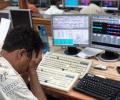
From the Sensex pack, Tata Steel declined 3.45 per cent, followed by Tata Motors which fell by 3.19 per cent. Bajaj Finserv, NTPC, JSW Steel, State Bank of India, Larsen & Toubro and Bharti Airtel were among the other major laggards. Nestle, Asian Paints, Hindustan Unilever and Tech Mahindra were the gainers.

'I can confidently say there will be another financial crisis soon enough, and probably more than one global crisis within the next century, given the increasingly integrated nature of the global economy.'

Among major Sensex shares, PowerGrid fell the most by 2.76 per cent. IndusInd Bank dropped 2.34 per cent, HUL by 2.23 per cent and NTPC by 2.04 per cent. ICICI Bank, HDFC Bank, HDFC, ITC, Infosys, L&T, Bajaj Finance, Kotak Bank, HCL Tech and Tech Mahindra were among the losers. On the other hand, Tata Motors rose the most by 2.94 per cent, followed by Titan which gained 1.26 per cent. Mahindra & Mahindra, SBI and TCS were also among gainers.

Just before the 2008 financial crisis made headlines, Indian companies were on a global buying spree. In the fifth part of the series, Dev Chatterjee and Krishna Kant discuss how the crisis came as a black swan event for some, changing the mood from exuberance to despair.
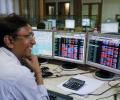
Benchmark equity indices Sensex and Nifty closed higher on Friday after two days of fall, helped by buying in metal, telecom and auto stocks amid a firm trend in global markets. Automakers led by Maruti Suzuki India, Hyundai, Mahindra & Mahindra reporting robust wholesales of passenger vehicles and GST collections crossing Rs 1.50 lakh crore for the third straight month in May also added to the optimism. The 30-share BSE Sensex climbed 118.57 points or 0.19 per cent to settle at 62,547.11.

Investors' wealth eroded by Rs 3.46 lakh crore on Wednesday as equity markets took a sharp tumble amid weak global trends and foreign fund outflows. The 30-share BSE Sensex fell by 676.53 points or 1.02 per cent to settle at 65,782.78. During the day, it plunged 1,027.63 points or 1.54 per cent to 65,431.68. In line with the weak trend in equities, the market capitalisation of BSE-listed firms eroded by Rs 3,46,947.54 crore to Rs 3,03,33,258.69 crore.

From the Sensex pack, HDFC, HDFC Bank, Mahindra & Mahindra, UltraTech Cement, Tata Steel, Bajaj Finance, State Bank of India, Reliance Industries, Bajaj Finserv and ICICI Bank were the major gainers. Power Grid, Maruti, Tech Mahindra, IndusInd Bank, HCL Technologies and Axis Bank were among the laggards.

The US Federal Reserve's interest rate decision, global market trends and trading activity of foreign investors are the major factors that would dictate terms in the equity markets in a holiday-shortened week ahead, analysts said. Equity markets will remain closed on Tuesday on account of Ganesh Chaturthi. From the global front, interest rate decisions from the Bank of England and Bank of Japan would also influence market trends.

The domestic stock market may face volatility amid the monthly derivatives expiry scheduled this week, while investors would mainly await the outcome of RBI's interest rate decision on Friday, said analysts. Global market movement would also continue to drive sentiment amid a bearish trend recently following rate hikes by the US Federal Reserve and other central banks. The Reserve Bank of India (RBI) may take cues from its global counterparts to raise interest rate for the fourth time in a row to control inflation.

Researchers at London School of Hygiene and Tropical Medicine and Oxford University headed the study to examine the possibility that health might suffer as a result of the market crashes. Lead author David Stuckler estimated that increased stress stemming from job losses could prompt a 2.4 per cent rise in suicide rates. Another 2.7 per cent rise in heart attack deaths could be expected, along with a 2.4 per cent increase in homicides rates.
The market price action seems to point in this direction. Let's hope we finally break out. It is about time! asserts Akash Prakash.
After a sharp fall in the share prices of HDFC Bank and other private sector lenders in the past three days, the BFSI (banking, financial services and insurance) sector weighting in the Nifty50 has slipped to a seven-year low of 32.03 per cent, down from nearly 36.6 per cent at the end of March 2023 and 34.5 per cent at the end of December 2023.

With the Nifty50 just about 3 per cent away from its all-time closing high of 18,812 points, analysts at BofA Securities suggest investors book profit. Their reasons for the advice include risks like the possibility of a cut in corporate earnings growth forecasts, high valuation (one-year forward P/E of 19.5x), interest rates staying elevated for longer-than-expected and credit tightening. Going ahead, they expect the Nifty50 index to drop to 16,000 levels - down nearly 12 per cent from the current level of 18,255 points, which they believe would be a good time to buy.

The index is currently trading at 149 per cent of its historical P/B valuation, surpassing its previous peak of 125 per cent made in 2020-21.

Tactical investors should have an investment horizon of around six months to one year, long-term investors should stick around for 10 years or more.

Other than ITC, other laggards include PowerGrid, Infosys, M&M, NTPC, SBI, HDFC, Kotak Bank, HDFC Bank, TCS, Hero MotoCorp, Coal India, ONGC, RIL, Asian Paint, IndusInd Bank, ICICI Bank, Maruti Suzuki, Bajaj Auto, Tata Motors, Bharti Airtel and Axis Bank.

Educational technology company Byju's chief financial officer Ajay Goel has quit after completing the audit process for the financial year 2022 and will return to Vedanta, the company said in a statement. The edtech major has roped in industry veteran Pradip Kanakia as senior advisor, and president (finance) Nitin Golani has been given additional responsibility as India chief finance officer (CFO) to handle the finance function of the company.
From the Sensex pack, NTPC, Bajaj Finance, IndusInd Bank, UltraTech Cement, Bajaj Finserv, State Bank of India, Tata Motors, ITC, Power Grid and Larsen & Toubro were the biggest gainers. IndusInd Bank climbed 2 per cent after the company on Tuesday reported a 30 per cent jump in consolidated net profit in April-June quarter at Rs 2,124.50 crore, helped by core income growth and lower bad loan provisions.
Bharti Airtel was the biggest gainer in the Sensex pack, rising 2.37 per cent, followed by Mahindra & Mahindra, HCL Tech, Tata Motors, Tech Mahindra, HDFC Bank, Wipro, Tata Consultancy Services, Axis Bank and Nestle. Asian Paints, Hindustan Unilever, Bajaj Finserv and NTPC were among the laggards.

Among the Sensex firms, Tech Mahindra, HCL Technologies, Wipro, Infosys, Bajaj Finance, Tata Consultancy Services, Bajaj Finserv and ICICI Bank were the major gainers. Power Grid, Nestle, Asian Paints and Hindustan Unilever were among the laggards.

Selling in index heavyweights, including Infosys, TCS, ICICI Bank and Reliance Industries, dragged the benchmark indices into the negative for the second straight session, analysts said. Among the Sensex shares, Asian Paints fell the most by 3.9 per cent as analysts expressed concerns over rising competition in the domestic paints market following the entry of Aditya Birla group company Grasim Industries into the paints segment. IT shares Infosys, TCS, HCL Tech, Wipro and Tech Mahindra continued to slide amid inflation concerns in the US market.

The culture of these firms is alien to the Indian financial system. Distressed assets funds are known for their ruthless recovery ethics. Slicing and dicing a company and selling it on a piecemeal basis is their usual practice. This is something Indian banks are finding a little uncomfortable.

Investors' wealth eroded by Rs 7.59 lakh crore on Monday as the equity market took a heavy drubbing amid escalating tensions in the Middle East. The 30-share BSE Sensex plunged 825.74 points or 1.26 per cent to settle at 64,571.88 points. During the day, the index plummeted 894.94 points or 1.36 per cent to 64,502.68 points.
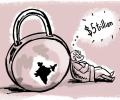
India decisively withstood global headwinds in 2023 and is likely to remain as the world's fastest-growing major economy on the back of growing demand, moderate inflation, stable interest rate regime and robust foreign exchange reserves. Despite widespread pessimism witnessed among the developed nations and the worsening geopolitical situation, India recorded a gross domestic product (GDP) expansion of 6.1 per cent in the March quarter. The growth moved up to 7.8 per cent in the June quarter and was 7.6 per cent in the September quarter. For the first six months of this fiscal, the growth was 7.7 per cent.

Axis Bank, Tata Steel, Kotak Mahindra Bank, ICICI Bank, Tata Motors, and Bajaj Finance were among the other major laggards. Tata Consultancy Services, Reliance Industries, UltraTech Cement, Infosys, HCL Technologies, and Tech Mahindra were among the gainers.

Among the Sensex firms, ICICI Bank and SBI led the index with the maximum gains of 4.68 per cent and 3.99 per cent, respectively. Other major gainers were Larsen & Toubro, Kotak Mahindra Bank and HDFC Bank. On the other hand, Wipro and Tata Motors defied the trend and traded in negative.

Among the Sensex firms, Infosys, NTPC, Power Grid, Titan, ITC, Tech Mahindra, Hindustan Unilever, Axis Bank, Tata Consultancy Services, Bajaj Finserv, Reliance Industries and UltraTech Cement were the biggest gainers. In contrast, IndusInd Bank, Kotak Mahindra Bank, Mahindra & Mahindra, JSW Steel, HDFC Bank and Maruti were the major laggards.

In a remarkable comeback, foreign portfolio investors (FPIs) have pumped Rs 1.7 lakh crore into the Indian equity markets in 2023, propelled by confidence in the country's robust economic fundamentals amid a challenging global landscape. The year 2023 has witnessed massive investment by FPIs, thanks to the sharp uptick in inflows of Rs 66,134 crore in December. Going forward, FPI flows are expected to be robust.
Among the Sensex firms, JSW Steel, Titan, Tata Steel, Sun Pharma, Reliance Industries, Bharti Airtel, Tata Motors and HDFC Bank were the biggest gainers. NTPC, Tech Mahindra, Maruti, State Bank of India and Larsen & Toubro were among the laggards.

Benchmark equity indices Sensex and Nifty rebounded from early lows to settle higher on Wednesday following buying in Reliance Industries, Larsen & Toubro and ITC and positive trends in Asian and European markets. The 30-share BSE Sensex rose by 173.22 points or 0.26 per cent to settle at 66,118.69. The index opened lower and fell further to a low of 65,549.96 in morning trade.
Tata Consultancy Services (TCS) has been ranked the third most-valued IT services brand globally, after Accenture and IBM, according to a report by Brand Finance. Four Indian IT services companies -- TCS, Infosys, HCL and Wipro -- secured spots in the top-10 global tally.

Laxity in enforcing KYC and allied norms suspected; money laundering gaps also on probe panel's mind

Among the Sensex firms, Larsen & Toubro, UltraTech Cement, JSW Steel, Titan, Bajaj Finance, Wipro, Tech Mahindra and Nestle were the major laggards. Maruti, Power Grid, Axis Bank, State Bank of India, NTPC, HDFC Bank, ITC and IndusInd Bank were the gainers.
The latest one being Ken Toombs, global head of consulting at the Bengaluru-based entity.
Among the Sensex firms, Adani Enterprises and Adani Ports sustained their gaining momentum and traded higher by 4.40 per cent and 4.37 per cent, respectively. BPCL, Axis Bank, Mahindra & Mahindra and SBI were the other major gainers. On the other hand, HCL Tech, Infosys and Bajaj Auto traded in the negative zone with a loss of up to 1.54 per cent.
From the Sensex pack, Tata Motors, HCL Technologies, Power Grid, Tech Mahindra, NTPC, Axis Bank, Kotak Mahindra Bank, Larsen & Toubro, Wipro, Nestle, Tata Consultancy Services and Infosys were among the major gainers. Bajaj Finance, Bajaj Finserv, Mahindra & Mahindra, UltraTech Cement, IndusInd Bank and State Bank of India were the major laggards.
